
A friend of mine recently had dental implants done and it ended up a complete disaster. The dentist did such a bad job, that she ended up losing part of her jaw. She’s in a lawsuit with the dentist that she is likely to win, but that’s costing her massive amounts of time and stress. Not to mention her jaw will never be the same and she still needs her teeth replaced. I know this doesn’t always happen. I am getting implant soon. How can I avoid getting a botched dental implant case?
Evie
Dear Evie,
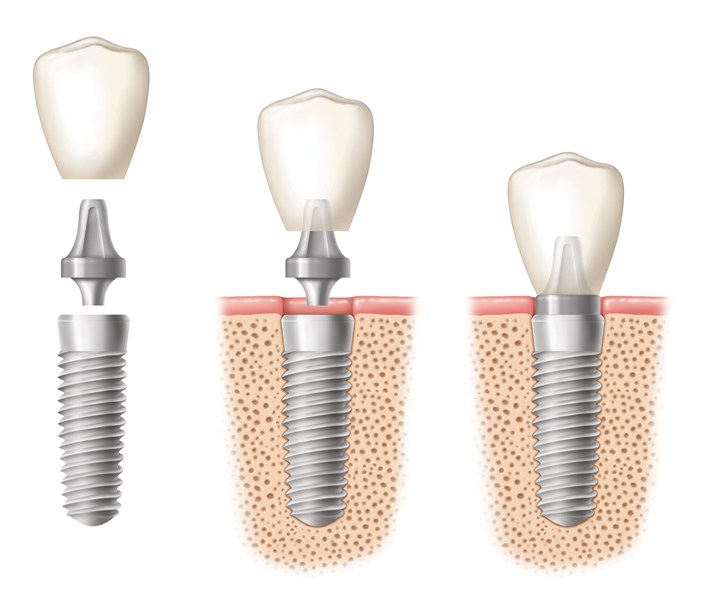
I completely understand your concern and am heart broken for what your friend has gone through. There are a lot of dental implant horror stories. One of the reasons for this is that there is not a recognized specialty in dental implants. Any general dentist can legally do it. But, it is one of the most advanced procedures out there.
When done well, dental implants are the best tooth replacement option and have one of the highest long-term success rates in dentistry. When not done well and dental implant failure ensues, patients face additional surgeries, expense, and months of frustration and sometimes physical agony.
So how can you avoid this?
Careful Pre-Diagnostics are Essential
A dental implant requires surgery to embed the implant fixture deep in your bone. Before anything else, your dentist should do a series of diagnostics to ensure no intervention needs to happen prior to that surgery. Diagnostics need to be done before treatment even begins. This enables you and your dentist to take steps to give you the best chance of success. Proper diagnosis and planning are just as important as the surgery itself. Make sure your dentist evaluates these factors:
- Comprehensive imaging. They should do more than an x-ray here. You need a CT scan. It’s essential to have 3-dimensional imaging. This will help a dentist with proper placement, helping them to avoid nerves and protecting the patient from sinus perforation.
- The health of your gums. If there is sign of gum disease, this needs to be treated ahead of time.
- Your overall health. This is a pretty easy one. You need to be in good general health.
- Adequate bone structure. Your teeth are held in by the bone integrating with the tooth root. In order for dental implants to stay in place, you need adequate jawbone to help retain them. If not, you can have a bone grafting treatment done ahead of time to build up the bone you need.
Make Sure Your Dentist Has Dental Implant Training
You also want to make sure your dentist has the training needed. Implants are not adequately taught in dental school. It is essential that your dentist has post-doctoral training. Because dental implant treatment combines surgery and restorative dentistry, communication is essential between the dentist and the oral surgeon. It needs to be the dentist who plans the implant placement, not the oral surgeon. Do not hesitate to ask how closely they work with the surgeon they use.
Additionally, you want to know a bit about their skill and experience. Do they do a lot of implant procedures? Make sure they define a lot. What is is their success rate? I would look for a dentist with a 95% or above success rate. If a dentist bristles at these questions, that is a red flag.
I know I’ve thrown a lot at you, so here is a short list of questions to help you to choose the right provider:
- Am I a good implant candidate?
- Will I need bone grafting?
- What imaging will be used to plan my treatment?
- Where did you get your post-doctoral implant training?
- How many of these procedures have you done?
- What is your success rate?
- What follow up do you plan to make sure things are going well?
- What happens if complications arise?
A qualified, reputable dentist will welcomes these conversations. They should also discuss all your options along with their pros and cons, from implants all the way down to complete removable dentures (or partials if you only need a few teeth replaced).
Finding the right dentist is your best chance of having a successful procedure. I hope this makes you feel confident that you can choose the right dentist and puts your mind at ease.
This blog is brought to you by a compassionate dentist in Kalamazoo, Dr. Susan Dennis.